
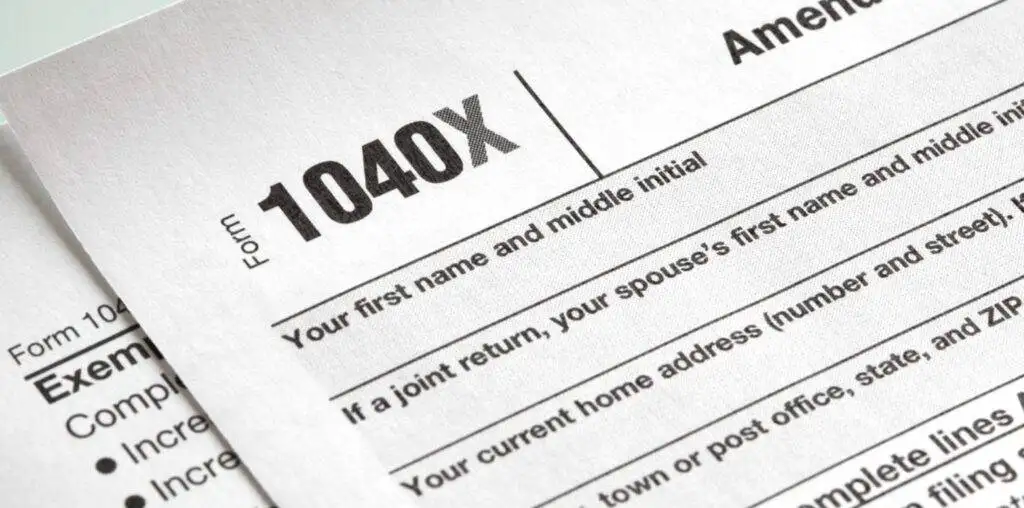
Few moments in personal finance produce a sinking feeling quite like checking the mailbox in late February or March, only to find a tax document you completely forgot existed. You have already filed your tax return, congratulated yourself on being ahead of schedule, and perhaps even received your refund. Now you are holding an unexpected Form 1099 showing income that never made it onto your Form 1040.
Discovering an omitted tax form is remarkably common, especially in an era of multiple income streams, freelance gigs, high-yield savings accounts, and investment apps. The good news is that the Internal Revenue Service has an established, routine process for correcting this exact situation using Form 1040-X, the Amended U.S. Individual Income Tax Return. Handling the error promptly and methodically will prevent small miscalculations from snowballing into steep penalties and stressful administrative headaches.
Why You Cannot Simply Ignore an Omitted 1099
When an extra 1099 arrives late, the temptation to leave your original return alone can be strong, particularly if the amount seems relatively modest. However, ignoring the form is one of the most expensive mistakes a taxpayer can make.
Whenever a company, client, financial institution, or brokerage issues you a Form 1099, they do not just send a copy to your home. They also transmit an identical electronic record directly to the IRS. The IRS processes these records through its Automated Underreporter program, a massive computerized matching system. This system cross-references the income figures reported by payers against the income figures entered on individual tax returns.
Because this matching process is automated, discrepancies are virtually guaranteed to be caught. When the automated system flags an amount on a 1099 that does not appear on your return, the agency does not assume an innocent mistake. Instead, it assumes underreported income, recalculates your tax liability, and applies statutory penalties and interest dating back to the original filing deadline. Addressing the omission yourself through an amended return demonstrates good faith and keeps you in control of the numbers.
Timing Your Amendment: When to File and When to Wait
Before you rush to complete Form 1040-X, pause and assess the current status of your original return. Filing an amendment at the wrong time can actually complicate your situation.
Wait Until Your Original Return Is Processed
If you submitted your original tax return only a few days ago, the IRS is likely still processing it. Do not submit an amended return while the initial submission is sitting in processing limbo. Introducing a Form 1040-X into the IRS processing pipeline while your original Form 1040 is actively being worked can trigger manual reviews, delay your original refund for months, and create conflicting records in the system.
If you are owed a refund on the original return, wait until that refund has been deposited into your bank account or received by check. Once the original return has cleared the system, you can move forward with filing Form 1040-X to report the additional income.
What if You Already Received an IRS Notice?
If several months have passed and you receive an official notice in the mail before you get around to amending, stop. Typically, this notice is a Notice CP2000, which details the discrepancy between the income reported on your return and the income reported by your payers.
If the IRS has already issued a CP2000, do not file Form 1040-X. The CP2000 is not a formal audit; it is a proposed adjustment. The notice will clearly explain how to respond, providing an option to agree with the proposed changes or dispute them with supporting documentation. Filing a 1040-X after receiving a CP2000 can confuse the automated department handling your case and cause unnecessary delays. Follow the specific response instructions outlined on the notice itself.
How Different 1099s Affect Your Amended Return
Not all 1099 forms affect your tax return in the same way. The type of form you missed dictates which additional schedules you must attach to Form 1040-X.
Nonemployee Compensation and Business Income: Forms 1099-NEC and 1099-MISC
If you earned income as an independent contractor, freelancer, or consultant, you likely received a Form 1099-NEC. Omitting this form has a dual impact because independent contractor earnings are subject to both ordinary income tax and self-employment tax.
When you amend for an omitted 1099-NEC, you will generally need to adjust or prepare Schedule C to report the business income and any associated deductible expenses you incurred while earning that money. You will also need to update Schedule SE to calculate self-employment tax, which covers Social Security and Medicare obligations. The resulting net income and tax adjustments then flow onto your Form 1040-X.
Interest and Dividends: Forms 1099-INT and 1099-DIV
With savings account interest rates fluctuating, many people receive interest payments that exceed the reporting threshold from institutions they rarely think about. A forgotten 1099-INT or 1099-DIV is usually straightforward to correct.
The additional interest or ordinary dividends simply increase your total income. However, if your total taxable interest or ordinary dividends exceed 1,500 dollars after adding the new amount, you may now be required to include or update Schedule B. Additionally, qualified dividends reported on a 1099-DIV benefit from preferential capital gains tax rates, which requires recalculating your tax using the Qualified Dividends and Capital Gain Tax Worksheet.
Capital Gains and Brokerage Transactions: Form 1099-B
Consolidated 1099 statements from brokerage houses often arrive later than standard forms and are notoriously easy to overlook if you made only a handful of stock, mutual fund, or cryptocurrency transactions.
A missing 1099-B means you must report the proceeds and cost basis of each transaction. You will need to complete or revise Form 8949 and Schedule D. If you sold assets at a loss, that loss can offset other capital gains and up to 3,000 dollars of ordinary income, which might actually lower your tax bill or increase your refund.
Step-by-Step Guide to Completing Form 1040-X
Form 1040-X is a compact, two-page document, but every figure on it must be precise. The form uses a three-column format to reconcile what you originally reported with the corrected amounts.
1. Gather Your Baseline Records
Do not attempt to fill out Form 1040-X from memory. Pull together the exact copy of your original Form 1040 as accepted by the IRS, the omitted 1099 form, and any receipts or supporting documents that relate to that income.
2. Work Through the Three Columns
Form 1040-X breaks down your adjusted gross income, deductions, tax liability, and payments across three core columns:
-
Column A (Original Amount): This reflects the figures exactly as they appeared on your originally accepted return or as previously adjusted by the IRS.
-
Column B (Net Change): This is the net difference between your original numbers and your corrected numbers. If your income increased by 2,500 dollars, you will enter a positive 2,500 dollars here. If a figure decreased, enter it as a negative number or in parentheses.
-
Column C (Correct Amount): This shows the final, accurate figure after combining Column A and Column B.
3. Check for Downstream Calculation Changes
Adding income to your tax return often creates a ripple effect. A higher adjusted gross income can alter your eligibility for specific credits and deductions, such as the child tax credit, education credits, or the student loan interest deduction. If you are reporting self-employment income, you may also become eligible for the qualified business income deduction under Section 199A. Make sure all downstream calculations reflect your updated adjusted gross income.
4. Write a Clear Explanation in Part III
On page two of Form 1040-X, you will find Part III, titled Explanation of Changes. This is your opportunity to clearly tell the IRS why you are filing an amendment.
Keep your explanation factual, polite, and concise. There is no need to write an emotional defense. A straightforward statement is best:
“Amending return to report additional nonemployee compensation of 2,400 dollars received from a late Form 1099-NEC. Schedule C and Schedule SE have been updated accordingly, along with resulting adjustments to total tax liability.”
Clear explanations allow IRS processing agents to verify the change quickly without requesting additional clarification.
Submitting Your Amended Return and Paying What You Owe
Historically, Form 1040-X had to be printed and submitted by mail. Today, the IRS accepts electronic filing for amended returns for recent tax years, provided your tax software supports it and you originally filed the return electronically.
If you e-file, ensure that all updated schedules and supporting forms are attached to the submission. If you must file a paper return, assemble the documents in order: Form 1040-X on top, followed by any schedules or forms that experienced changes (such as Schedule C or Schedule D), and a copy of the 1099 if it shows federal income tax withheld. Sign and date the return, and mail it to the specific IRS processing center designated for your state.
Pay Any Balance Due Immediately
If the omitted 1099 results in additional tax owed, pay the balance due immediately rather than waiting for an invoice from the IRS. The IRS charges interest on unpaid taxes starting from the original due date of the return (typically April 15), regardless of any extensions.
You can submit your payment electronically through IRS Direct Pay or the Electronic Federal Tax Payment System. When making the payment, select Amended Return or Form 1040-X as the payment reason, and select the specific tax year being amended. Paying promptly caps the accumulation of interest and failure-to-pay penalties.
Remember to Check Your State Tax Obligations
One critical step taxpayers frequently forget is addressing their state taxes. If you live in a state with an individual income tax, your state return is closely tied to your federal adjusted gross income.
When you increase your federal income on Form 1040-X, your state taxable income almost certainly increases as well. The IRS shares audit and adjustment data with state departments of revenue. If you amend your federal return and neglect your state return, your state tax agency will eventually catch the disparity and send a collection bill with interest and penalties attached.
Most states provide an equivalent amended state return form. Many state revenue departments require you to notify them of any federal adjustments within a specific window, often between 30 and 90 days. Prepare and file your amended state return alongside your federal 1040-X to ensure your tax records remain fully aligned.
Strategies to Avoid Missing 1099s in the Future
While correcting a mistake with Form 1040-X is straightforward, preventing the problem in future years saves time and stress.
First, maintain a running list of all income sources throughout the year. If you open a new high-yield savings account, perform freelance work for a one-off client, or trade assets on a new platform, add the entity to a tax preparation checklist.
Second, resist the urge to file on the very first day tax software opens in mid-January. While early filing is enticing if you anticipate a refund, many financial institutions do not issue Forms 1099-B, 1099-DIV, or composite brokerage statements until mid-to-late February. Giving payers adequate time to issue all necessary paperwork prevents premature filing.
Finally, you can access your official Wage and Income Transcript directly through your online IRS account. Payers are required to report copies of your 1099s to the IRS, and these records eventually populate in your transcript. Reviewing this transcript before filing can reveal forgotten accounts and ensure that your original return is completely accurate the first time around.
