
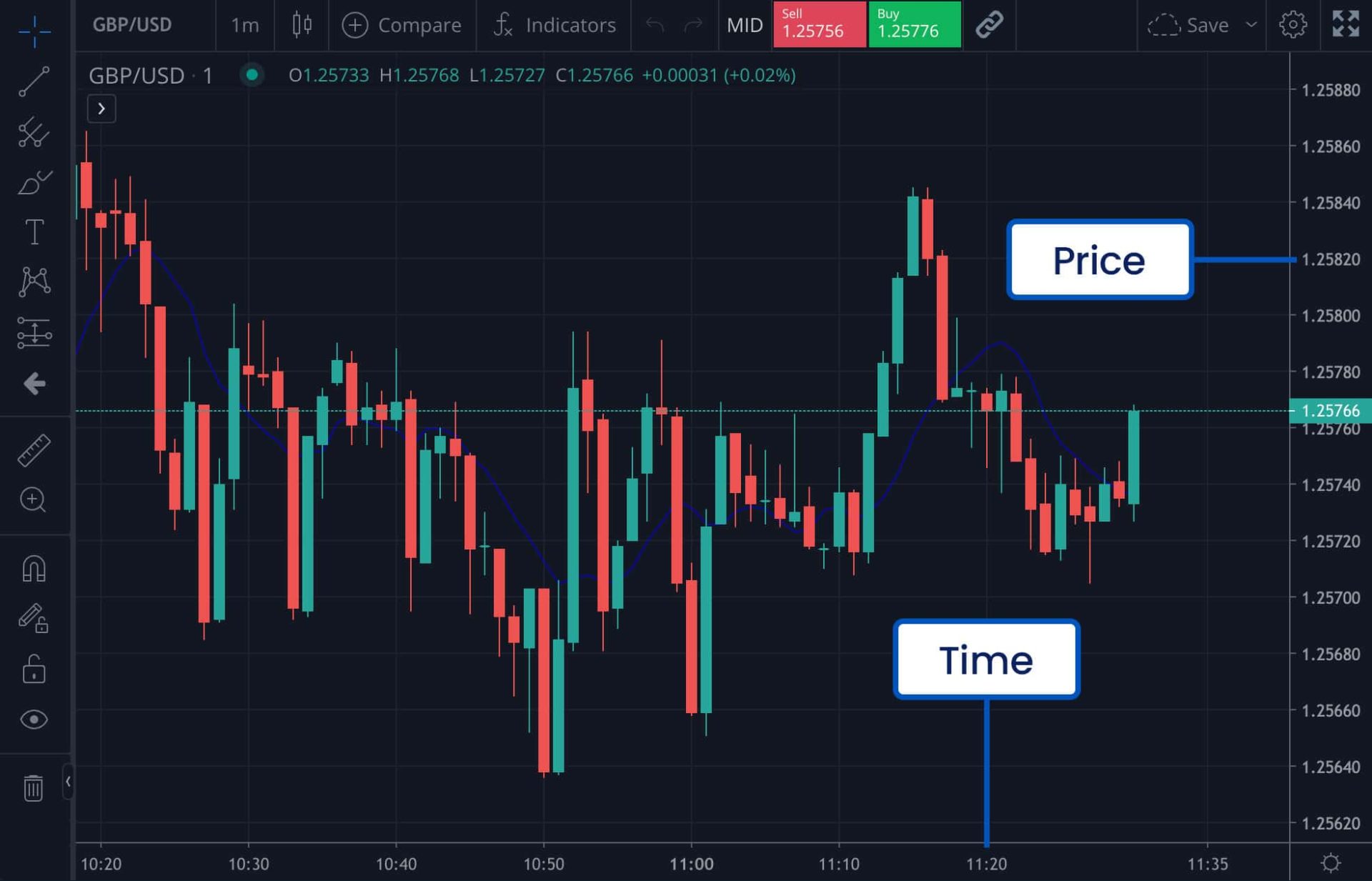
Forex trading, also known as foreign exchange trading, is the process of buying and selling currencies to profit from changes in their value. It is the largest financial market in the world, with trillions of dollars traded daily. Unlike stock markets, forex operates 24 hours a day, five days a week, making it accessible to traders across different time zones.
This guide breaks down forex trading in a clear, realistic way—without hype—so you can understand how it works, what drives the market, and how to approach it responsibly.
What Is Forex Trading?
Forex trading involves exchanging one currency for another at an agreed price. Currencies are traded in pairs, such as EUR/USD or GBP/JPY. The first currency in the pair is the base currency, and the second is the quote currency.
When you trade forex, you are essentially speculating on whether one currency will strengthen or weaken against another.
Key Characteristics of the Forex Market
- Decentralized market with no single exchange
- High liquidity, allowing fast trade execution
- Leverage availability, enabling larger positions with smaller capital
- 24-hour trading cycle, from Monday to Friday
How Forex Trading Works
Forex trading is conducted through brokers who provide access to trading platforms. Traders analyze price movements and place buy or sell orders based on expected market direction.
Basic Trade Example
- If you believe the euro will rise against the US dollar, you buy EUR/USD.
- If the euro strengthens, you profit.
- If it weakens, you incur a loss.
Small price movements, measured in pips, can translate into gains or losses depending on trade size.
Major Currency Pairs Explained
Not all currency pairs behave the same way. Some are more stable, while others are volatile.
Common Forex Pair Categories
- Major pairs: EUR/USD, USD/JPY, GBP/USD
- Minor pairs: EUR/GBP, AUD/NZD
- Exotic pairs: USD/TRY, EUR/ZAR
Major pairs tend to have lower spreads and higher liquidity, making them popular among beginners.
Factors That Influence Forex Prices
Forex prices are shaped by a mix of economic, political, and psychological factors.
Core Market Drivers
- Interest rates set by central banks
- Economic indicators such as inflation, GDP, and employment data
- Geopolitical events and global uncertainty
- Market sentiment and trader expectations
Understanding these forces helps traders avoid random decision-making and trade with context.
Popular Forex Trading Strategies
There is no single “best” strategy. Successful traders choose approaches that match their personality, schedule, and risk tolerance.
Common Trading Styles
- Scalping: Very short-term trades targeting small price moves
- Day trading: Opening and closing trades within the same day
- Swing trading: Holding positions for days or weeks
- Position trading: Long-term trades based on macro trends
Each strategy requires different levels of patience, screen time, and emotional control.
Risk Management in Forex Trading
Risk management is what separates consistent traders from gamblers. Even strong strategies fail without proper controls.
Essential Risk Management Rules
- Never risk more than 1–2% of your account on a single trade
- Always use stop-loss orders
- Avoid over-leveraging your account
- Keep emotions out of decision-making
Preserving capital is more important than chasing profits.
Advantages and Disadvantages of Forex Trading
Like any financial activity, forex trading has both upsides and downsides.
Advantages
- High liquidity and fast execution
- Low entry barriers for beginners
- Opportunities in both rising and falling markets
Disadvantages
- High leverage increases risk
- Emotional pressure can lead to mistakes
- Requires discipline and continuous learning
Being aware of both sides leads to more realistic expectations.
Is Forex Trading Right for You?
Forex trading is not a shortcut to easy money. It demands time, education, patience, and emotional discipline. For those willing to learn, practice on demo accounts, and manage risk carefully, it can become a valuable skill rather than a gamble.
Frequently Asked Questions (FAQs)
1. How much money do I need to start forex trading?
You can start with a small amount, but having sufficient capital helps manage risk more effectively and reduces emotional pressure.
2. Can forex trading be a full-time career?
Yes, but only for traders who achieve consistent results over time and treat trading like a business, not a hobby.
3. Is forex trading risky for beginners?
Yes, especially without education and risk management. Beginners should start with demo accounts before trading real money.
4. How long does it take to learn forex trading?
Basic concepts can be learned in weeks, but developing consistency often takes months or years of practice.
5. Do I need advanced math skills for forex trading?
No advanced math is required. Basic arithmetic and logical thinking are sufficient.
6. What is leverage, and why is it risky?
Leverage allows you to control larger trades with less capital, but it magnifies both profits and losses.
7. Can I trade forex on my phone?
Yes, many brokers offer mobile trading platforms, though larger screens are often better for analysis.
